An informationist (or information specialist in context) provides research and knowledge management services in the context of clinical care or biomedical research. Although there is no one educational pathway or formalized set of skills or knowledge for informationists, one way to think of the informationist is as one who possesses the knowledge and skill of a medical librarian with extensive research specialization and some formal clinical or public health education that goes beyond on-the-job osmosis. Medical librarians and other biomedical professional organizations have been exploring the possibilities for evaluating how informationists are being used and whether their activities supplement or replace medical library activity. More generally, an informationist is a professional who works with information within a particular business, analytic or scientific context to drive toward outcomes based on evidence, analysis, prediction and execution. For example, an extension of the term is increasingly emerging in financial services, life sciences and health care industries. Though still nascently in use, its adoption applies to individuals with extensive industry expertise, acute familiarity with organizational structures and processes, deep domain level information mastery and information systems technical savvy. Informationists in this context support transformational initiatives within and across functional areas of an enterprise as architects, governance experts, continuous improvement advocates and strategists. == Background == The term was proposed in 2000 by Davidoff & Florance. Their editorial suggested that physicians should be delegating their information needs to informationists, just as they currently order CT scans from radiologists or cardiac catheterizations from cardiologists. They conceived of an information professional who was embedded in (and indeed, supported by) the clinical departments. Supporters of the concept see it as a means for librarians to reinvigorate connections with the faculty/clinicians, as well as provide superior service by dint of informationists' biomedical training. Critics complained that the idea is nothing new; librarians already provide in-depth, high quality information services and clinical medical librarians have been working alongside physicians, nurses and other clinicians for years. Large informationist programs in the U.S. exist at the National Institutes of Health and at Vanderbilt University. Welch Medical Library at Johns Hopkins University (JHU) is developing an informationist service model in which its 10 clinical and public health librarians are moving from serving as liaison librarians for assigned departments toward becoming embedded informationists within their departments. To prepare for the embedded informationist role, librarians are undertaking education as needed to supplement their backgrounds. For example, librarians bring experience in clinical behavior counseling, public health, nursing, and more. Informationist training can then focus upon filling gaps in research methods knowledge more so than on gaining additional knowledge in the librarian's area of expertise. Courses, seminars and workshops being undertaken include those covering systematic reviews, evidence-based medicine, critical appraisal, medical language, anatomy and physiology, biostatistics, and clinical research. The term informationist is related to that of informatician—also informaticist—and many informationists do possess skills in clinical topics, bioinformatics, and biomedical informatics. Harvard University, the University of Pittsburgh, and Washington University in St. Louis are examples of institutional libraries which have hired PhD-level scientists (who may or may not have library degrees) to provide informatics support for biomedical research.
VOCEDplus
VOCEDplus is a free international research database about tertiary education, maintained and developed by staff at the c (NCVER) in Adelaide, South Australia. The focus of the database content is the relation of post-compulsory education and training to workforce needs, skills development, and social inclusion. == Structure == The content of the VOCEDplus database encompasses vocational education and training (VET), higher education, lifelong learning, informal learning, VET in schools, adult and community education, apprenticeships/traineeships, international education, providers of education and training, and workforce development. It is international in scope and contains over 84,000 English language records, many with links to full text documents. VOCEDplus contains extensive Australian materials and includes a wide range of international information, covering outcomes of tertiary education in the shape of published research, practice, policy, and statistics. Entries are included for the following types of publications: reports; annual reports; papers; discussion papers; occasional papers; working papers; books; book chapters; conference papers; conference proceedings; journals; journal articles; policy documents; published statistics; theses; podcasts; and teaching and training materials. Each database entry contains standard bibliographic information and an abstract. Many entries include full text access via the publisher's website or a digitised copy. == History == === 1989-1997 === In the early years VOCEDplus was known as VOCED. The original database was produced by a network of clearinghouses across Australia with the aim of sharing activities in the technical and further education (TAFE) sector. VOCED was produced in hardcopy and an electronic version was distributed on diskette. === 1997-2001 === 1997 - the first web version of VOCED was made available from the National Centre for Vocational Education Research (NCVER) organisational website 1998 - a major project to upgrade the database and expand its international coverage commenced 2001 - creation of VOCED's own website 2001 - VOCED endorsed as the UNESCO international database for technical and vocational education and training (TVET) research information === 2001-2009 === Many changes to the database and website occurred during this period with a focus on continuous improvement to meet the needs of users and utilise emerging technologies. 2006 - materials produced for two adult literacy and learning programs funded by the Australian Department of Education, Employment and Workplace Relations (DEEWR) - the Workplace English Language and Learning (WELL) Programme and the Adult Literacy National Project (ALNP) included in VOCED 2007 - the Australian clearinghouse network transferred most of the hardcopy collections to NCVER, to form a centralised repository of resources 2009 - materials produced by Reframing the Future (RTF) a vocational education and training workforce development initiative of the Australian, State and Territory Governments included in VOCED === 2009-2014 === A major rebuild of the database and website was undertaken during this period to take advantage of the potential of new technologies to provide improved services and incorporate Web 2.0 technologies (RSS feeds, and share and bookmark tools). 2009 - scope expanded to more fully encompass the higher education sector 2011 - launch of VOCEDplus with the name change representing the enhanced features and extended focus 2012 - a major retrospective digitisation project commenced and by the end of the 2012-2013 financial year a total of 9,328 publications (593,534 pages/microfiche frames) had been digitised, ensuring these publications are available electronically for free === 2014-2019 === A number of significant curated content products were released during this period. 2015 - release of a refreshed look to adopt the new NCVER branding plus a number of search enhancements (Guided search, Expert search, and Glossary search) were added 2015 - first in the series of 'Focus on...' pages released 2016 - launch of the 'Pod Network', a convenient and efficient platform that allows instant access to research and a multitude of resources on a range of subjects 2017 - completion of the 'Pod Network', consisting of 20 Pods (on broad subjects including Apprenticeships and traineeships, Foundation skills, Teaching and learning, Career development, and Students) and 74 Podlets (on narrow topics including Online learning, Social media, VET in schools, STEM skills, and Adult literacy) 2018 - launch of the 'Timeline of Australian VET Policy Initiatives' and the 'VET Knowledge Bank' which contains a suite of products capturing Australia's diverse, complex and ever-changing VET system 2019 - after an internal review, a refreshed, streamlined version of the 'Pod Network' was released, consisting of 13 Pods and 20 Podlets 2019 - launch of the 'VET Practitioner Resource' which contains a range of information to support VET practitioners in their work and is organised into three sections: (1) Teaching, training and assessment: standards, guidance, research and good practice resources to inform daily work; (2) Practitioners as researchers: information for undertaking practitioner-led research; and (3) The VET workforce: information about VET teachers and trainers, and the professional development needs of the VET workforce 2019 - VOCEDplus celebrated 30 years of providing information to the tertiary education sector and the homepage was refreshed to make it more modern and easier to use === 2020- === VOCEDplus continued to be accessible throughout the COVID-19 pandemic. 2020-2021 - the VET Knowledge Bank added a dedicated page, 'COVID-19 announcements', that showcases the measures introduced by the Australian, state and territory governments to mitigate the impact of the pandemic and promote economic recovery 2020-2024 - published research about the effects of the pandemic on education and training, providers, students, labour markets, employment and employees was collected and made permanently available in the database 2024 - VOCEDplus celebrated 35 years of providing information to the tertiary education sector. The homepage was refreshed and a number of enhancements and new features were implemented including a new My Profile feature, improvements to My Selection, accessible search history and saved searches, enhanced search functionality, and improved navigation.
Morphing
Morphing is a special effect in motion pictures and animations that changes (or morphs) one image or shape into another through a seamless transition. Traditionally such a depiction would be achieved through dissolving techniques on film. Since the early 1990s, this has been replaced by computer software to create more realistic transitions. A similar method is applied to audio recordings, for example, by changing voices or vocal lines. == Early transformation techniques == Long before digital morphing, several techniques were used for similar image transformations. Some of those techniques are closer to a matched dissolve – a gradual change between two pictures without warping the shapes in the images – while others did change the shapes in between the start and end phases of the transformation. === Tabula scalata === Known since at least the end of the 16th century, Tabula scalata is a type of painting with two images divided over a corrugated surface. Each image is only correctly visible from a certain angle. If the pictures are matched properly, a primitive type of morphing effect occurs when changing from one viewing angle to the other. === Mechanical transformations === Around 1790 French shadow play showman François Dominique Séraphin used a metal shadow figure with jointed parts to have the face of a young woman changing into that of a witch. Some 19th century mechanical magic lantern slides produced changes to the appearance of figures. For instance a nose could grow to enormous size, simply by slowly sliding away a piece of glass with black paint that masked part of another glass plate with the picture. === Matched dissolves === In the first half of the 19th century "dissolving views" were a popular type of magic lantern show, mostly showing landscapes gradually dissolving from a day to night version or from summer to winter. Other uses are known, for instance Henry Langdon Childe showed groves transforming into cathedrals. The 1910 short film Narren-grappen shows a dissolve transformation of the clothing of a female character. Maurice Tourneur's 1915 film Alias Jimmy Valentine featured a subtle dissolve transformation of the main character from respected citizen Lee Randall into his criminal alter ego Jimmy Valentine. The Peter Tchaikovsky Story in a 1959 TV-series episode of Disneyland features a swan automaton transforming into a real ballet dancer. In 1985, Godley & Creme created a "morph" effect using analogue cross-fades on parts of different faces in the video for "Cry". === Animation === In animation, the morphing effect was created long before the introduction of cinema. A phenakistiscope designed by its inventor Joseph Plateau was printed around 1835 and shows the head of a woman changing into a witch and then into a monster. Émile Cohl's 1908 animated film Fantasmagorie featured much morphing of characters and objects drawn in simple outlines. == Digital morphing == In the early 1990s, computer techniques capable of more convincing results saw increasing use. These involved distorting one image at the same time that it faded into another through marking corresponding points and vectors on the "before" and "after" images used in the morph. For example, one would morph one face into another by marking key points on the first face, such as the contour of the nose or location of an eye, and mark where these same points existed on the second face. The computer would then distort the first face to have the shape of the second face at the same time that it faded the two faces. To compute the transformation of image coordinates required for the distortion, the algorithm of Beier and Neely can be used. === Concerns === In 1993 concerns were raised about the authenticity of digitally altered images arising from morphing. Images of fake "tween" people found half way between two morphed people created a skeptical media long before AI. === Early examples === In or before 1986, computer graphics company Omnibus created a digital animation for a Tide commercial with a Tide detergent bottle smoothly morphing into the shape of the United States. The effect was programmed by Bob Hoffman. Omnibus re-used the technique in the movie Flight of the Navigator (1986). It featured scenes with a computer generated spaceship that appeared to change shape. The plaster cast of a model of the spaceship was scanned and digitally modified with techniques that included a reflection mapping technique that was also developed by programmer Bob Hoffman. The 1986 movie The Golden Child implemented early digital morphing effects from animal to human and back. Willow (1988) featured a more detailed digital morphing sequence with a person changing into different animals. A similar process was used a year later in Indiana Jones and the Last Crusade to create Walter Donovan's gruesome demise. Both effects were created by Industrial Light & Magic, using software developed by Tom Brigham and Doug Smythe (AMPAS). In 1991, morphing appeared notably in the Michael Jackson music video "Black or White" and in the movies Terminator 2: Judgment Day and Star Trek VI: The Undiscovered Country. The first application for personal computers to offer morphing was Gryphon Software Morph on the Macintosh. Other early morphing systems included ImageMaster, MorphPlus and CineMorph, all of which premiered for the Amiga in 1992. Other programs became widely available within a year, and for a time the effect became common to the point of cliché. For high-end use, Elastic Reality (based on MorphPlus) saw its first feature film use in In The Line of Fire (1993) and was used in Quantum Leap (work performed by the Post Group). At VisionArt Ted Fay used Elastic Reality to morph Odo for Star Trek: Deep Space Nine. The Snoop Dogg music video "Who Am I? (What's My Name?)", where Snoop Dogg and the others morph into dogs. Elastic Reality was later purchased by Avid, having already become the de facto system of choice, used in many hundreds of films. The technology behind Elastic Reality earned two Academy Awards in 1996 for Scientific and Technical Achievement going to Garth Dickie and Perry Kivolowitz. The effect is technically called a "spatially warped cross-dissolve". The first social network designed for user-generated morph examples to be posted online was Galleries by Morpheus. In late 1991 Yeti Productions employed a young Stephen Regelous to run it's 486 computer graphics system in Wellington New Zealand. After producer Barry Thomas showed him Michael Jackson's "Black or White", Regelous wrote 10,000 lines of C++ code of triangle-based digital morphing software. Together they created morphing based TV commercials for The NZ Cancer Society, Fit food, Salvation Army and others. The Fit food commercial employed morphing with 35mm, pin registered, digitally controlled motion control designed and made by Russell Collins with software by Stephen Regelous. In Taiwan, Aderans, a hair loss solutions provider, did a TV commercial featuring a morphing sequence in which people with lush, thick hair morph into one another, reminiscent of the end sequence of the "Black or White" video. === Present use === Morphing algorithms continue to advance and programs can automatically morph images that correspond closely enough with relatively little instruction from the user. This has led to the use of morphing techniques to create convincing slow-motion effects where none existed in the original film or video footage by morphing between each individual frame using optical flow technology. Morphing has also appeared as a transition technique between one scene and another in television shows, even if the contents of the two images are entirely unrelated. The algorithm in this case attempts to find corresponding points between the images and distort one into the other as they crossfade. While perhaps less obvious than in the past, morphing is used heavily today. Whereas the effect was initially a novelty, today, morphing effects are most often designed to be seamless and invisible to the eye. A particular use for morphing effects is modern digital font design. Using morphing technology, called interpolation or multiple master tech, a designer can create an intermediate between two styles, for example generating a semibold font by compromising between a bold and regular style, or extend a trend to create an ultra-light or ultra-bold. The technique is commonly used by font design studios. == Software == After Effects Animate Elastic Reality FantaMorph Gryphon Software Morph Morph Age Morpheus Nuke SilhouetteFX
FoundationDB
FoundationDB is a free and open-source multi-model distributed NoSQL database owned by Apple Inc. with a shared-nothing architecture. The product was designed around a "core" database, with additional features supplied in "layers." The core database exposes an ordered key–value store with transactions. The transactions are able to read or write multiple keys stored on any machine in the cluster while fully supporting ACID properties. Transactions are used to implement a variety of data models via layers. The FoundationDB Alpha program began in January 2012 and concluded on March 4, 2013, with their public Beta release. Their 1.0 version was released for general availability on August 20, 2013. On March 24, 2015, it was reported that Apple has acquired the company. A notice on the FoundationDB web site indicated that the company has "evolved" its mission and would no longer offer downloads of the software. On April 19, 2018, Apple open sourced the software, releasing it under the Apache 2.0 license. == Main features == The main features of FoundationDB include the following: Ordered key–value store In addition to supporting standard key-based reads and writes, the ordering property enables range reads that can efficiently scan large swaths of data. Transactions Transaction processing employs multiversion concurrency control for reads and optimistic concurrency for writes. Transactions can span multiple keys stored on multiple machines. ACID properties FoundationDB guarantees serializable isolation and strong durability via redundant storage on disk before transactions are considered committed. Layers Layers map new data models, APIs, and query languages to the FoundationDB core. They employ FoundationDB's ability to update multiple data elements in a single transaction, ensuring consistency. An example is their SQL layer. Commodity clusters FoundationDB is designed for deployment on distributed clusters of commodity hardware running Linux. Replication FoundationDB stores each piece of data on multiple machines according to a configurable replication factor. Triple replication is the recommended mode for clusters of 5 or more machines. Scalability FoundationDB is designed to support horizontal scaling through the addition of machines to a cluster while automatically handling data replication and partitioning. Systems supported FoundationDB supports packages for Linux, Windows, and macOS. The Linux version supports production clusters, while the Windows and macOS versions support local operation for development purposes. Configurations on Amazon EC2 are also supported. Programming language bindings FoundationDB supports language bindings for Python, Go, Ruby, Node.js, Java, PHP, and C, all of which are made available with the product. == Design limitations == The design of FoundationDB results in several limitations: Long transactions FoundationDB does not support transactions running over five seconds. Large transactions Transaction size cannot exceed 10 MB of total written keys and values. Large keys and values Keys cannot exceed 10 kB in size. Values cannot exceed 100 kB in size. == History == FoundationDB, headquartered in Vienna, Virginia, was started in 2009 by Nick Lavezzo, Dave Rosenthal, and Dave Scherer, drawing on their experience in executive and technology roles at their previous company, Visual Sciences. In March 2015 the FoundationDB Community site was updated to state that the company had changed directions and would no longer be offering downloads of its product. The company was acquired by Apple Inc., which was confirmed March 25, 2015. On April 19, 2018, Apple open sourced the software, releasing it under the Apache 2.0 license.
Database-as-IPC
In computer programming, Database-as-IPC may be considered an anti-pattern where a disk persisted table in a database is used as the message queue store for routine inter-process communication (IPC) or subscribed data processing. If database performance is of concern, alternatives include sockets, network socket, or message queue. British computer scientist, Junade Ali, defined the Database-as-IPC Anti-Pattern as using a database to "schedule jobs or queue up tasks to be completed", noting that this anti-pattern centres around using a database for temporary messages instead of persistent data. == Controversy == The issue arises if there is a performance issue, and if additional systems (and servers) can be justified. In terms of performance, recent advancements in database systems provide more efficient mechanisms for signaling and messaging, and database systems also support memory (non-persisted) tables. There are databases with built-in notification mechanisms, such as PostgreSQL, SQL Server, and Oracle. These mechanisms and future improvements of database systems can make queuing much more efficient and avoid the need to set up a separate signaling or messaging queue system along with the server and management overhead. While MySQL doesn't have direct support for notifications, some workarounds are possible. However, they would be seen as non-standard and therefore more difficult to maintain.
Human–robot interaction
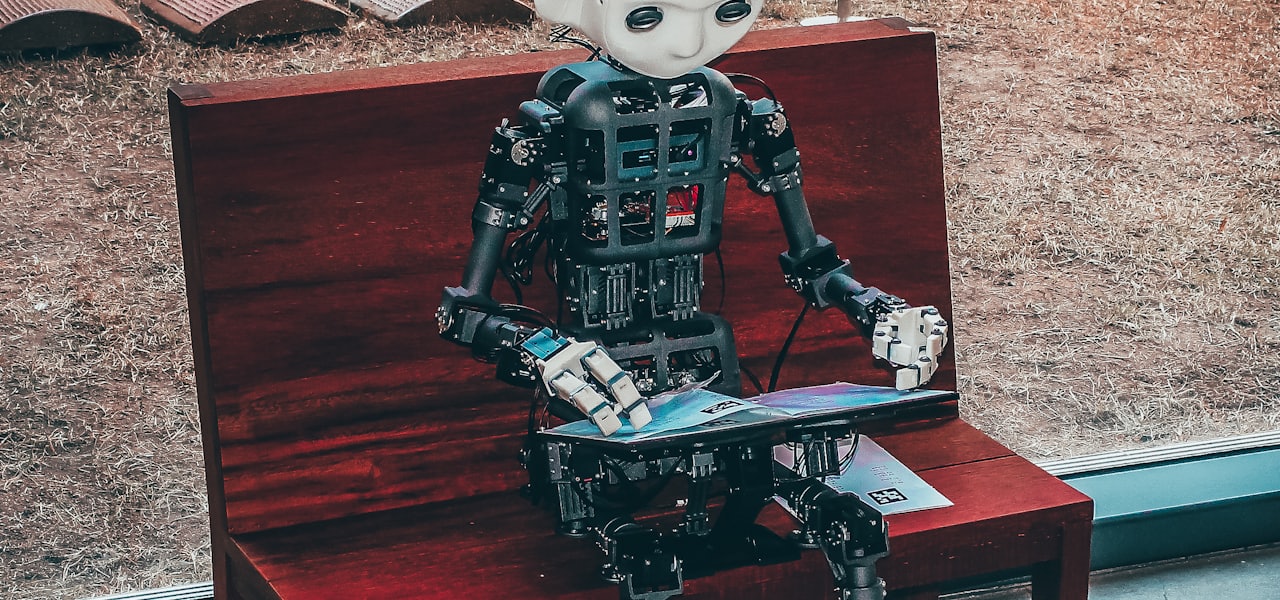
Human–robot interaction (HRI) is the study of interactions between humans and robots. Human–robot interaction is a multidisciplinary field with contributions from human–computer interaction, artificial intelligence, robotics, natural language processing, design, psychology and philosophy. A subfield known as physical human–robot interaction (pHRI) has tended to focus on device design to enable people to safely interact with robotic systems. == Origins == Human–robot interaction has been a topic of both science fiction and academic speculation even before any robots existed. Because much of active HRI development depends on natural language processing, many aspects of HRI are continuations of human communications, a field of research which is much older than robotics. The origin of HRI as a discrete problem was stated by 20th-century author Isaac Asimov in 1941, in his novel I, Robot. Asimov coined Three Laws of Robotics, namely: A robot may not injure a human being or, through inaction, allow a human being to come to harm. A robot must obey the orders given it by human beings except where such orders would conflict with the First Law. A robot must protect its own existence as long as such protection does not conflict with the First or Second Laws. These three laws provide an overview of the goals engineers and researchers hold for safety in the HRI field, although the fields of robot ethics and machine ethics are more complex than these three principles. However, generally human–robot interaction prioritizes the safety of humans that interact with potentially dangerous robotics equipment. Solutions to this problem range from the philosophical approach of treating robots as ethical agents (individuals with moral agency), to the practical approach of creating safety zones. These safety zones use technologies such as lidar to detect human presence or physical barriers to protect humans by preventing any contact between machine and operator. Although initially robots in the human–robot interaction field required some human intervention to function, research has expanded this to the extent that fully autonomous systems are now far more common than in the early 2000s. Autonomous systems include from simultaneous localization and mapping systems which provide intelligent robot movement to natural-language processing and natural-language generation systems which allow for natural, human-esque interaction which meet well-defined psychological benchmarks. Anthropomorphic robots (machines which imitate human body structure) are better described by the biomimetics field, but overlap with HRI in many research applications. Examples of robots which demonstrate this trend include Willow Garage's PR2 robot, the NASA Robonaut, and Honda ASIMO. However, robots in the human–robot interaction field are not limited to human-like robots: Paro and Kismet are both robots designed to elicit emotional response from humans, and so fall into the category of human–robot interaction. Goals in HRI range from industrial manufacturing through Cobots, medical technology through rehabilitation, autism intervention, and elder care devices, entertainment, human augmentation, and human convenience. Future research therefore covers a wide range of fields, much of which focuses on assistive robotics, robot-assisted search-and-rescue, and space exploration. == The goal of friendly human–robot interactions == Robots are artificial agents with capacities of perception and action in the physical world often referred by researchers as workspace. Their use has been generalized in factories but nowadays they tend to be found in the most technologically advanced societies in such critical domains as search and rescue, military battle, mine and bomb detection, scientific exploration, law enforcement, entertainment and hospital care. These new domains of applications imply a closer interaction with the user, sharing the workspace but also goals in terms of task achievement. The subfield of physical human–robot interaction (pHRI) has largely focused on device design to enable people to safely interact with robotic systems but is increasingly developing algorithmic approaches in an attempt to support fluent and expressive interactions between humans and robotic systems. With the advance in AI, the research is focusing on one part towards the safest physical interaction but also on a socially correct interaction, dependent on cultural criteria. The goal is to build an intuitive, and easy communication with the robot through speech, gestures, and facial expressions. Kerstin Dautenhahn refers to friendly Human–robot interaction as "Robotiquette" defining it as the "social rules for robot behaviour (a 'robotiquette') that is comfortable and acceptable to humans" The robot has to adapt itself to our way of expressing desires and orders and not the contrary. But every day environments such as homes have much more complex social rules than those implied by factories or even military environments. Thus, the robot needs perceiving and understanding capacities to build dynamic models of its surroundings. It needs to categorize objects, recognize and locate humans and further recognize their emotions. The need for dynamic capacities pushes forward every sub-field of robotics. Furthermore, by understanding and perceiving social cues, robots can enable collaborative scenarios with humans. For example, with the rapid rise of personal fabrication machines such as desktop 3D printers, laser cutters, etc., entering our homes, scenarios may arise where robots can collaboratively share control, co-ordinate and achieve tasks together. Industrial robots have already been integrated into industrial assembly lines and are collaboratively working with humans. The social impact of such robots have been studied and has indicated that workers still treat robots and social entities, rely on social cues to understand and work together. On the other end of HRI research the cognitive modelling of the "relationship" between human and the robots benefits the psychologists and robotic researchers the user study are often of interests on both sides. This research endeavours part of human society. For effective human – humanoid robot interaction numerous communication skills and related features should be implemented in the design of such artificial agents/systems. == General HRI research == HRI research spans a wide range of fields, some general to the nature of HRI. === Methods for perceiving humans === Methods for perceiving humans in the environment are based on sensor information. Research on sensing components and software led by Microsoft provide useful results for extracting the human kinematics (see Kinect). An example of older technique is to use colour information for example the fact that for light skinned people the hands are lighter than the clothes worn. In any case a human modelled a priori can then be fitted to the sensor data. The robot builds or has (depending on the level of autonomy the robot has) a 3D mapping of its surroundings to which is assigned the humans locations. Most methods intend to build a 3D model through vision of the environment. The proprioception sensors permit the robot to have information over its own state. This information is relative to a reference. Theories of proxemics may be used to perceive and plan around a person's personal space. A speech recognition system is used to interpret human desires or commands. By combining the information inferred by proprioception, sensor and speech the human position and state (standing, seated). In this matter, natural-language processing is concerned with the interactions between computers and human (natural) languages, in particular how to program computers to process and analyze large amounts of natural-language data. For instance, neural-network architectures and learning algorithms that can be applied to various natural-language processing tasks including part-of-speech tagging, chunking, named-entity recognition, and semantic role labeling. === Methods for motion planning === Motion planning in dynamic environments is a challenge that can at the moment only be achieved for robots with 3 to 10 degrees of freedom. Humanoid robots or even 2 armed robots, which can have up to 40 degrees of freedom, are unsuited for dynamic environments with today's technology. However lower-dimensional robots can use the potential field method to compute trajectories which avoid collisions with humans. === Cognitive models and theory of mind === Humans exhibit negative social and emotional responses as well as decreased trust toward some robots that closely, but imperfectly, resemble humans; this phenomenon has been termed the "Uncanny Valley". However recent research in telepresence robots has established that mimicking human body postures and expressive gestures has made the robots likeable and engaging in a remote setting. Further, the presence o
Fantavision
Fantavision is an animation program by Scott Anderson for the Apple II and published by Broderbund in 1985. Versions were released for the Apple IIGS (1987), Amiga (1988), and MS-DOS (1988). Fantavision allows the creation of vector graphics animations using the mouse and keyboard. The user creates frames, and the software generates the frames between them. Because this is done in real-time, it allows for creative exploration and quick changes. The program uses a graphical user interface in the style of the Macintosh with pull-down menus and black text on a white background. Advertisements claimed Fantavision a revolutionary breakthrough that brings the animation features of "tweening" and "transforming" to home computers. == Reception == Compute! in 1989 called Fantavision the best animation program for the IBM PC, although it noted the inability to draw curves. == Reviews == Games #70